Hadley Freeman On Anorexia

Hadley Freeman is a journalist and author. She worked for the Guardian and now for the Times.

This was, predictably, a book signing after listening to her being interviewed (by Helen Lewis) about her book on anorexia. Freeman suffered from it for years and had several long stays in hospital where she was with other anorexics.

Not all her treatment was helpful. One doctor put her on something that triggered a latent epilepsy from which she has suffered ever since. Thankfully, something has lessened the frequency of attacks. She did say what that something was but I forget.

In this shot she is talking to my wife Tamara and looks decidedly less defeated than she looked when talking to the person who was in the queue ahead of us. That said, she looks wan and less than in full health. It could be she was simply tired but I thought maybe it was the toll on her of those years of anorexia and something deeper in her.

Freeman talked very well about anorexia and she had a different take on it than I have heard before. Rather than that the anorexic thinks they look great, they are expressing that they are ill. They do not have a different way to express it so it comes out in the body. She talked about the desire in young girls and woman not to be a seen as a sexual object by men. She mentioned it being caused by a fear of the gaze of men or of their own mystifying burgeoning sexuality. I hope I got that right but if it interests you there is her book on the subject – Good Girls -A Story and Study of Anorexia.

It’s not just a look back at her own experience but an understanding based on interviews with fellow sufferers with whom she was in hospital and doctors who talk about how treatment has changed over the years.

That said, she explained that there is no treatment in the sense of a medicine to make it all go away. Freeman mentioned how OCD took over as anorexia lessened, and that she believes she has a predisposition, partly genetic and partly something else unspecified beyond just being ‘like that’ that caused her anorexia.

She was clear that under-eating and overeating are two sides of the same coin and that bulimia, because it is hidden, is not of the same family.

All in all, well worth going and I learned something.

Family Out For A Drive

About five pony and trap vehicles were riding through the centre of Cambridge. I just happened upon them as they came up the street and I held the camera at waist height and judged where it was pointing – and it worked out OK. Ricoh GRIII, and the metadata tells me I shot at f1 45 at 1/2000 second and ISO 250.

I guess the boy at the front is videoing the trip.

For anyone who knows Cambridge, this is on the street just outside the Senate House, and you can just see the archway to Gonville and Caius College in the background. The market Square is just to the right of the frame down the street by the side of the Cambridge University Bookshop.

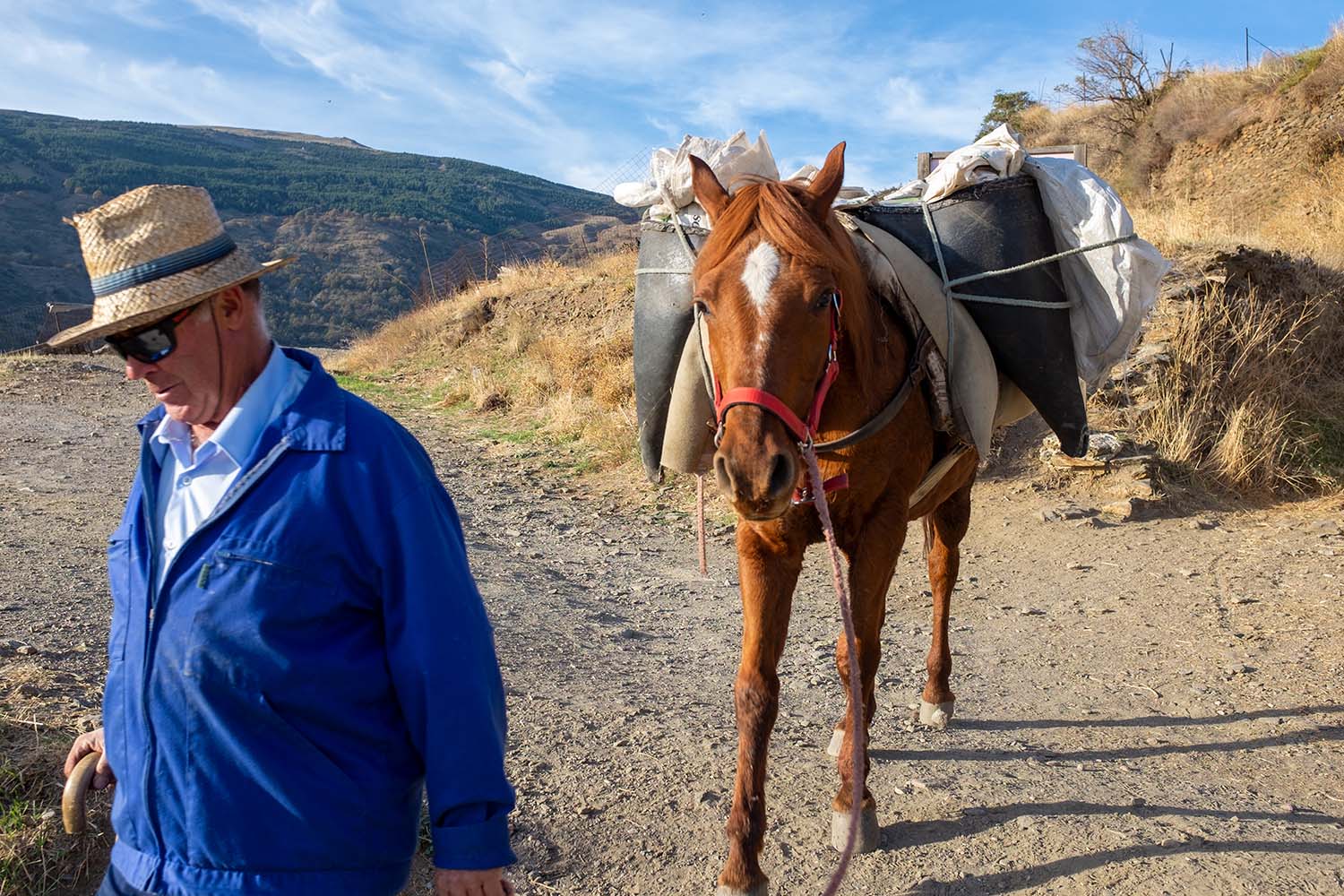
Man and Horse above Capileira

man and horse above Capileira in Spain

Capileira is the highest of three villages in the gorge of the Poqueira river in Andalusia in Spain. The road is full of hairpin turns and obscured by low cloud. In the village cloud covers everything in the mornings, until the sun burns it off. We were there in 2017 and each morning we would see cloud outside the window of our hotel.

When the sun rises, it warms up the colours of the roof tiles and burns off the cloud, and suddenly you can see the opposite side of the valley. Apparently, each year in winter the snow cuts the village off from the outside world. 

When you walk to the end of the road above the village and continue on the track, you can see how the cloud hangs in the valley and covers the village.

The road peters out above the village and the road is blocked off with boulders and continues as a track.

When I was up there exploring, I turned around and saw this man and the horse. I grabbed the shot, and due to luck rather than judgement, the exposure and the focusing were just right. 

Shot with a Fuji X100s. I owned the camera for the best part of seven years and used it as my only camera for nearly all of that time. It has a fixed 23mm lens and a leaf shutter.

Richmond Park

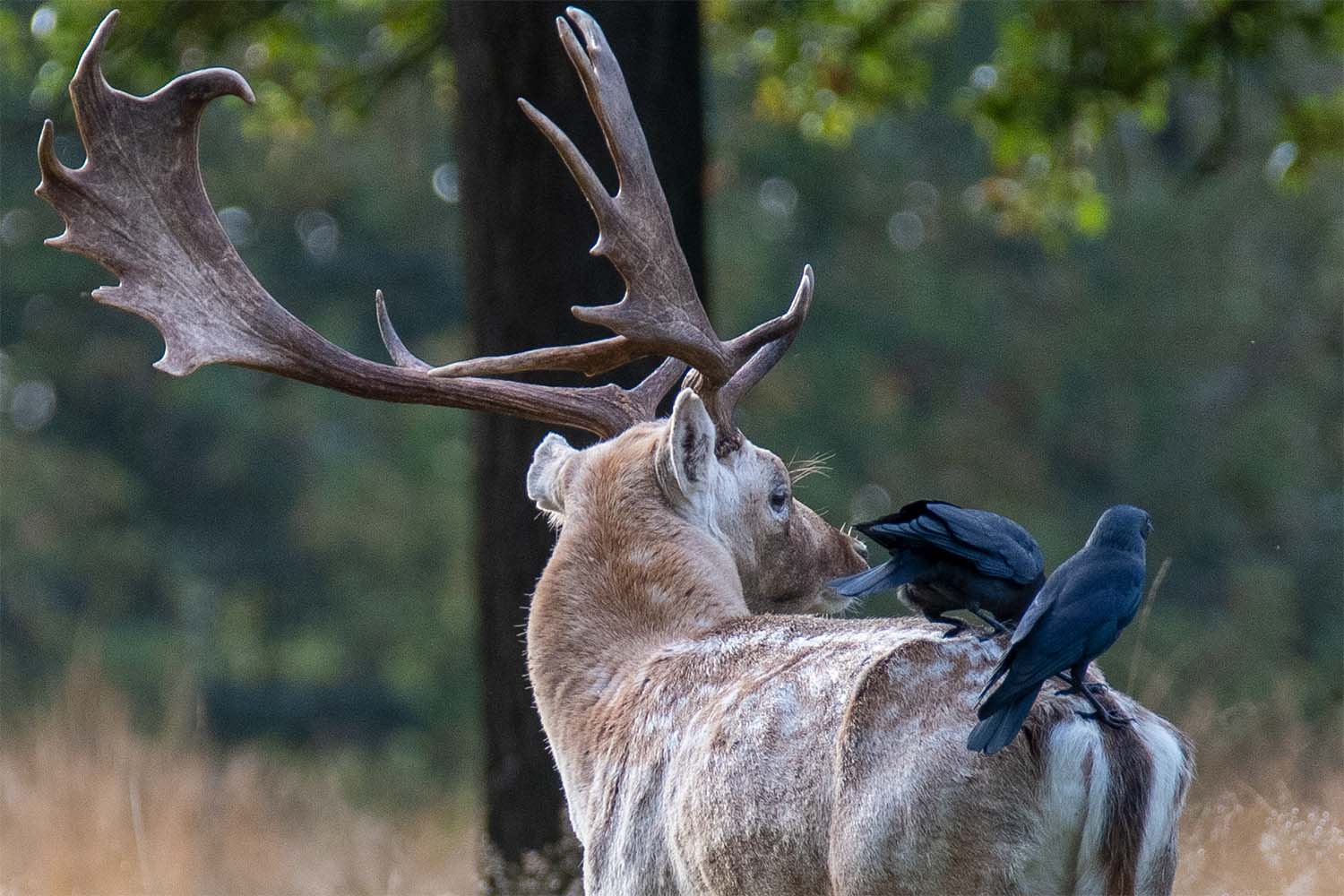
Red deer and jackdaws Richmond park

Red deer stag in Richmond Park – crop of about 70% of the frame to take out the plain sky.

Nikon D500 and Nikon 70-300mm f/4.5-5.6 AF-P VR lens.

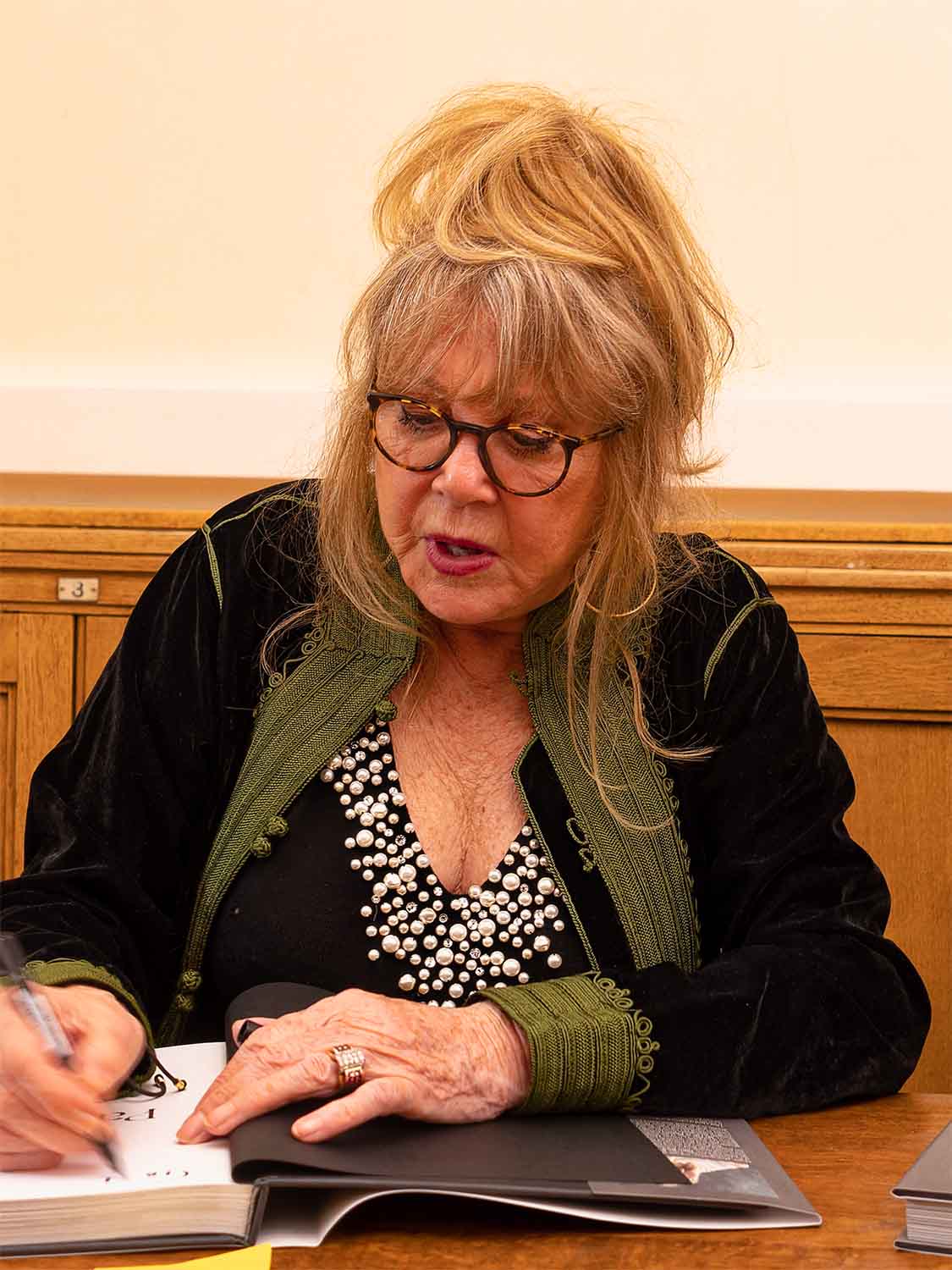
Pattie Boyd

Pattie Boyd book signing
Pattie Boyd at a book signing in Cambridge 21 April 2023

Pattie Boyd at a book signing in Cambridge 21 April 2023. Photographed with a Ricoh GR III at ISO 800, 1./10 second at f2.8. I held the camera at mid chest height and looked down estimating when the subject was properly in the frame. This is a crop, my wife is stood just to Pattie’s side.

After signing these two books (Tamara bought one for a close friend) Pattie got into an involved conversation with my wife. They got on like a house on fire, and I photographed the conversation on my iPhone.

Pattie Boyd on Wikipedia

Patricia Anne Boyd (born 17 March 1944) is an English model and photographer. She was one of the leading international models during the 1960s and, with Jean Shrimpton, epitomised the British female look of the era. Boyd married George Harrison in 1966, experiencing the height of the Beatles’ popularity and sharing in their embrace of Indian spirituality. She divorced Harrison in 1977 and married Harrison’s friend Eric Clapton in 1979; they divorced in 1989. Boyd inspired Harrison’s songs ” Need You”, “If I Needed Someone”, “Something” and “For You Blue”, and Clapton’s songs “Layla”, “Bell Bottom Blues” and “Wonderful Tonight”.